
Office building facade

Sectors

Sectors we serve

We work with large organisations whose operations already run across Singapore and the region, and whose constraints are regulatory, operational and multilingual at the same time. Sector knowledge is used to plan those constraints, not to claim a specialised product for each industry.

Context

Work shaped by how large organisations actually operate here

Singaporewithai is engaged by groups of five hundred staff and more, typically with a Singapore headquarters or a regional hub in Raffles Place, Marina Bay or the city fringe, and with operations that cross Malaysia, Indonesia, Vietnam or Hong Kong. The sectors below are where we have defined repeatable patterns of scope. They are not an exhaustive list of industries we will consider, and they are not a claim that we hold sector licences or regulatory approvals of our own.

What the sectors share is more important than what divides them. Data sits in more than one system of record. Documents arrive in more than one language and format. Shift-based operations cannot pause for a project workshop at a convenient hour. Internal risk policy, and in several sectors a supervisor's expectations, already constrain how a model may be used. We plan for those conditions in the statement of work rather than discovering them at go-live.

Sector

Financial services

Banks, insurers and related groups in Singapore operate under close supervisory attention and under internal policies that already name model risk, data protection and customer outcomes. Artificial-intelligence work in this setting is usually an extension of a process that already has an owner, a policy and an audit trail, rather than a new channel invented for a pilot. Claims files, onboarding packs, credit papers and trade documents are the materials we most often see. They are high volume, mixed in quality, and already subject to retention and access rules that a new system must inherit.

Group risk and technology will expect documentation that can be read without a vendor in the room. We plan for that from assess. Data residency in Singapore is a frequent constraint, as is the need to keep customer records out of unmanaged tools. Human review is placed on actions that affect a customer, a payment or a regulatory report. We describe our practice as alignment with the client's policy and with the Personal Data Protection Act. We do not present that alignment as a licence, an exemption or a supervisory endorsement.

Constraints we plan for

Supervisory expectations on model documentation, legacy core systems that cannot be replaced for a single use case, multilingual correspondence, and four-eyes review that must survive automation of the first pass.

Sector

Logistics and maritime

Singapore's port, airport and warehouse operators run on schedules that do not wait for a project plan. Container, air cargo and yard data already exist in terminal, customs and transport systems, yet a planner still often rebuilds a view in a spreadsheet for each shift. Document packets for shipping, dangerous goods and trade compliance arrive as scans and e-mail attachments in more than one language. The operational prize is a forecast or an extract that lands in the tool the control room already uses, at the time the shift needs it.

We plan around gate and yard cut-off times, around the fact that a model cannot be taken down in the middle of a berth window without a rollback, and around the mixture of operational technology and back-office systems. Data residency may apply to manifests and customer files. Human review sits on exceptions that would delay a vessel, a flight or a bonded movement. Working sessions are booked against the operations calendar, not against a consultancy calendar.

Constraints we plan for

Shift-based operations, legacy terminal and warehouse systems, multilingual shipping files, and availability requirements that make untested go-lives unacceptable.

Sector

Manufacturing

Manufacturers with plants in Singapore and across Johor, Batam or further ASEAN sites hold equipment manuals, work orders, quality records and safety notices in volumes that technicians cannot search during a stoppage. Maintenance knowledge often sits with a small number of specialists. A retrieval assistant over an approved corpus can reduce that concentration, provided it cites the page, respects permissions, and never replaces the work permit. Quality and demand forecasting are the other common requests, using historian and enterprise-resource data that already exist but are rarely joined.

Operational technology networks are segregated for good reason. We do not place a language-model service on a control network as a convenience. Integration is designed with the OT security lead, and production actions remain with the named supervisor. Multilingual manuals and vendor PDFs are the normal corpus, not a clean knowledge base. Sites that run shifts need a rollback that a night supervisor can trigger without calling Raffles Place.

Constraints we plan for

OT and IT segregation, shift handover, multilingual vendor documentation, and safety procedures that a model must not authorise on its own.

Sector

Healthcare administration

Our healthcare work is administrative. We do not design clinical diagnostic systems and we do not take on work that would issue a treatment recommendation. The processes we see are scheduling, coding support, claims correspondence, records request handling and internal knowledge for administrative staff in hospital groups and related organisations. Personal data is the central constraint. Subsets, lawful basis, retention and access are agreed before any extract. Where a synthetic or strongly masked sample can answer a feasibility question, we use it.

Singapore's healthcare institutions already operate under the Personal Data Protection Act and under internal policies that are often stricter than the statutory minimum. Human review is mandatory on any output that could be filed to a patient record or sent to a claimant. Logging must be capable of showing who saw what. Data residency in Singapore is treated as the default unless the client records a different decision with its own legal advisers. We do not interpret clinical guidelines.

Constraints we plan for

Personal data minimisation, residency, multilingual correspondence, and a hard boundary between administrative automation and clinical decision-making.

Sector

Professional services

Law, accounting, consulting and corporate-services firms in Singapore hold large volumes of contracts, working papers, research memoranda and matter files. The useful application is usually an assistant or a document workflow over an approved corpus, with permissioning that matches the matter, the client conflict wall and the records policy. Partners will not accept a system that cannot cite a source or that answers from an unbounded public model on a client question. Logging is required for later quality review.

Firms often already have a knowledge tool that staff do not trust. The work is then as much about corpus hygiene, permission mapping and evaluation questions as it is about the model. Multilingual contracts are common in regional practices. We plan for that in the labelled sample. We do not provide legal or audit opinions, and we do not train on client-confidential files outside the environment the firm designates. Handover includes the corpus map so that the knowledge team can continue the work.

Constraints we plan for

Matter-level permissioning, conflict walls, client confidentiality, multilingual contracts, and evaluation sets that partners will actually recognise as their work.

Region

Regional footprint

Engagements are delivered from Singapore. Work with groups that also operate in Malaysia, Indonesia, Vietnam and Hong Kong is common, and travel to those sites is arranged per statement of work rather than as a standing tour. Remote engineering support is used for pipeline, evaluation and documentation tasks that do not require floor access. Workshops with operations staff are held on site so that shift patterns and language of work are visible.

Regional delivery does not change the residency rule the client sets for Singapore records. If a dataset must remain in Singapore, processing stays there even when a workshop is held in another city. Local counterparts are named in the statement of work so that access requests and incident contacts are not routed through a generic regional mailbox.
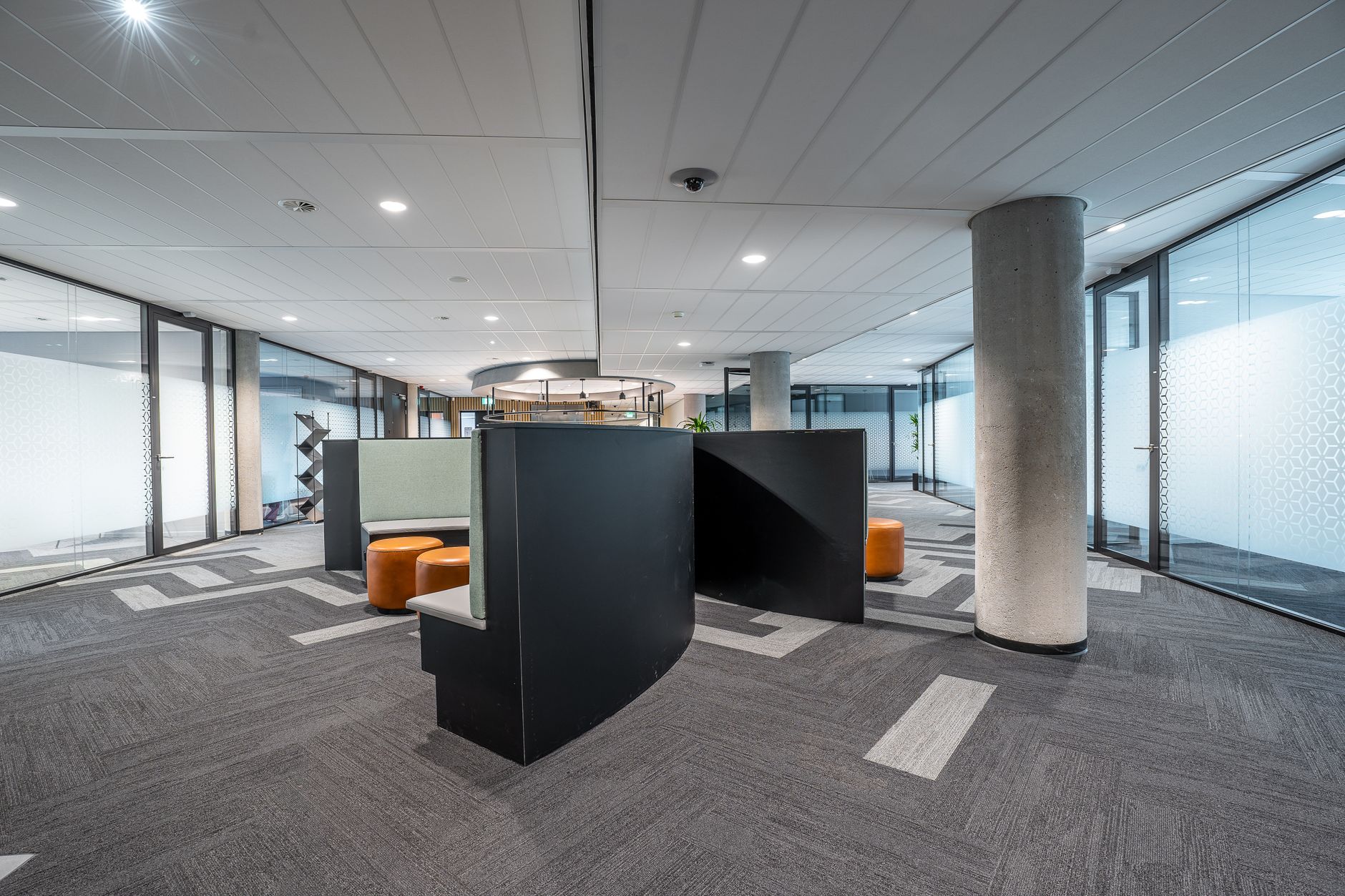
Office interior with meeting booths
Delivery is based at Raffles Place, with on-site work at the client's premises

Discuss a programme with Singaporewithai

If your organisation sits in one of these sectors and you have a named owner for a defined process, we can scope an assess phase. Write with the process, the sites involved, and the constraint that will shape the work.

Request a scoping call

We use one cookie to remember whether you accepted this notice. No analytics or advertising cookies are set. See our cookies page for details.